
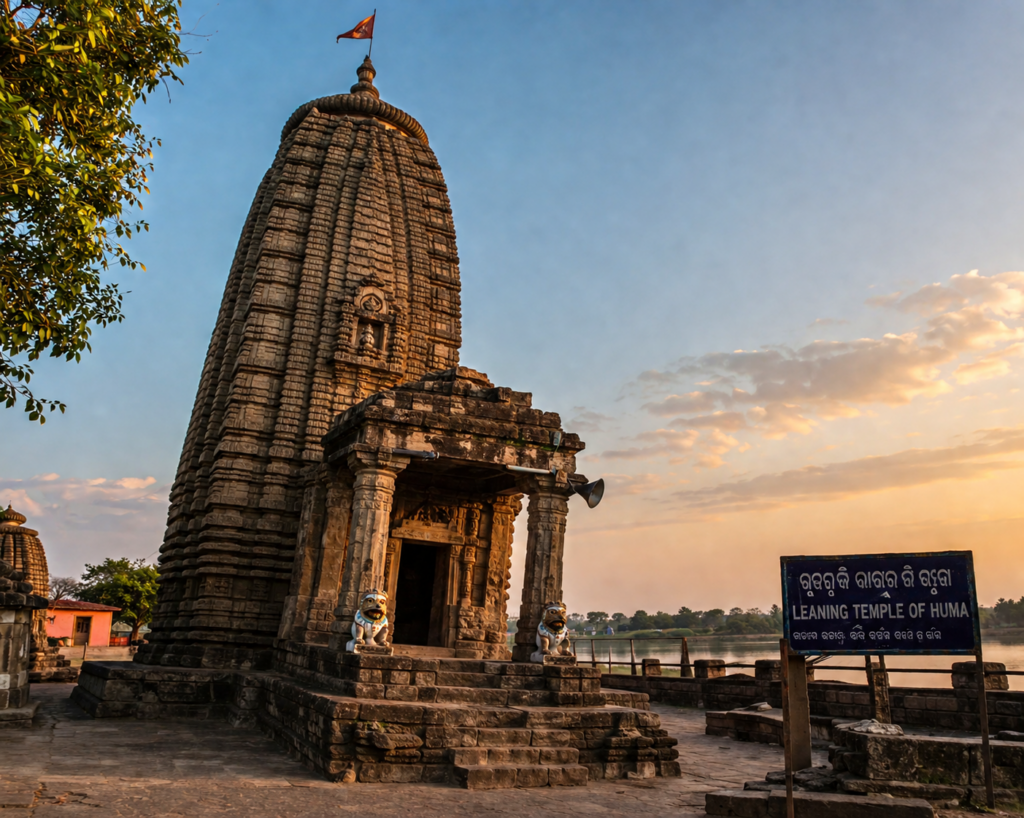
The Leaning Temple of Huma, located near Sambalpur in Odisha, is one of the most fascinating and mysterious temples in India. Dedicated to Lord Shiva, this temple stands on the banks of the Mahanadi River and is widely known for its unusual architectural feature—the entire structure leans at an angle. What makes it even more intriguing is that not just the main temple, but also the surrounding smaller shrines and structures appear tilted, yet they have remained stable for centuries.
Believed to have been built in the 17th century during the rule of the Chauhan dynasty, the temple reflects the traditional Kalinga style of architecture, with intricate stone carvings and a strong, compact structure. Despite its tilted appearance, the temple has withstood natural forces like floods, storms, and the passage of time, making it an engineering marvel as well as a spiritual center.
According to local legends, the leaning nature of the temple is often associated with divine power rather than structural reasons. Devotees believe that the temple’s unique form is a symbol of Lord Shiva’s presence and blessing. Inside the temple, the Shiva Linga is worshipped with great devotion, and rituals are performed daily by priests and visiting devotees.
The temple becomes especially lively during the festival of Mahashivratri, when thousands of pilgrims gather to offer prayers and participate in religious ceremonies. The peaceful surroundings of the Mahanadi River add to the spiritual atmosphere, making it a serene place for worship and reflection.
Another interesting aspect of the temple is the presence of sacred fish in the nearby river waters. These fish are protected and considered holy, and visitors often feed them as part of local tradition. The calm river, combined with the ancient temple structure, creates a picturesque and tranquil setting.
Overall, the Leaning Temple of Huma is not just a place of worship but also a remarkable blend of mystery, history, and spirituality. Its unique tilted structure, cultural significance, and scenic location make it a must-visit destination for anyone exploring Sambalpur and the rich heritage of Odisha.