
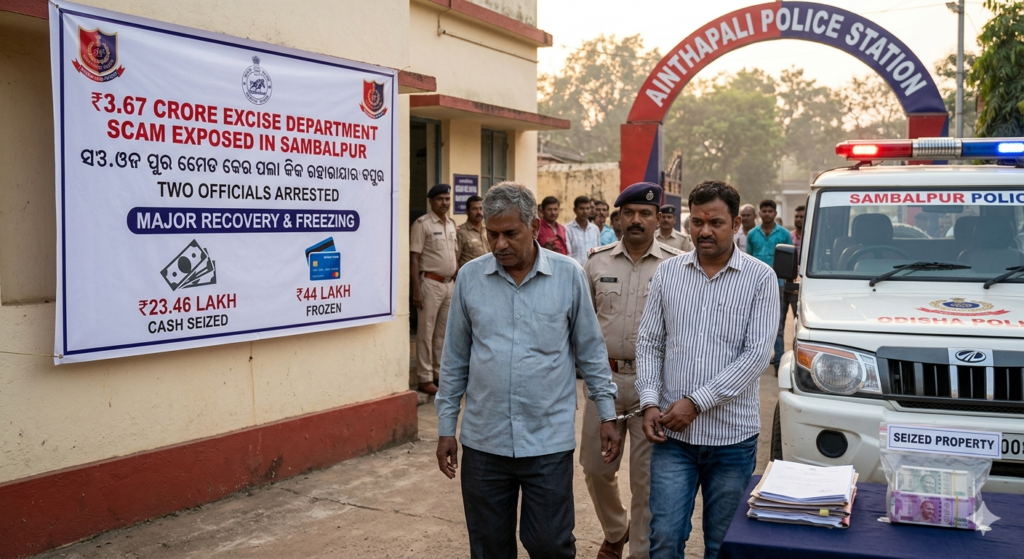
A major financial irregularity has come to light in Sambalpur, Odisha, where authorities have uncovered an alleged ₹3.67 crore excise fraud, leading to the arrest of two individuals. The case has drawn significant attention due to the scale of the fraud and its implications for revenue loss and regulatory oversight in the region.
According to preliminary findings, the fraud is believed to involve manipulation of excise records and evasion of government duties, possibly linked to the distribution and sale of regulated goods such as liquor. Officials suspect that forged documents, underreporting of transactions, and unauthorized practices were used to bypass excise regulations, resulting in substantial financial losses to the state.
The case came to light after routine inspections and intelligence inputs triggered a deeper investigation by the excise and enforcement authorities. A detailed probe revealed discrepancies in records, prompting officials to conduct raids and verify transactions. During these operations, crucial documents and evidence were seized, which helped establish the alleged involvement of the accused.
Following the investigation, two individuals were taken into custody, and further inquiries are underway to determine whether more people are connected to the scheme. Authorities have indicated that the investigation may expand to uncover a larger network, if any, involved in similar activities.
Officials have emphasized that such fraudulent practices not only result in significant revenue loss to the government but also undermine the legal system and fair business practices. Strict action is being taken to ensure accountability and to prevent similar incidents in the future.
The incident has also highlighted the need for stronger monitoring systems, transparency, and digital tracking within the excise department. Enhancing regulatory mechanisms and conducting regular audits can help detect irregularities at an early stage and reduce the risk of large-scale fraud.
In response to the case, authorities have reiterated their commitment to maintaining lawful operations and financial integrity. They have also urged businesses and individuals to comply with regulations and report any suspicious activities.
Overall, the exposure of the ₹3.67 crore excise fraud in Sambalpur serves as a wake-up call for stricter enforcement and vigilance, reinforcing the importance of accountability and transparency in public administration.